
Understanding the ICH M13A risk-based framework: When are fasting and fed bioequivalence studies needed?

The introduction of the International Council for Harmonisation (ICH) M13A guideline represented a major step forward in the harmonisation of bioequivalence (BE) requirements for immediate-release (IR) solid oral dosage forms.[1] One of its key contributions is a structured, risk-based framework for determining whether BE should be demonstrated under fasting conditions, fed conditions, or both. The guideline improves efficiency in generic drug development while maintaining a scientifically robust assessment of comparable product performance.
Rather than applying uniform fasting and fed study requirements to all IR products, ICH M13A recommends the evaluation of product-specific risk factors. This approach reduces unnecessary clinical studies for well-characterized drug products while supporting scientifically justified regulatory decisions. However, applying this in practice requires an understanding of how to interpret the risk-based framework to classify IR drug products as “high-risk” or “non-high-risk” and how that classification informs the study conditions.
In this post, we explore the key principles that underpin ICH M13A risk classification, how these principles influence fasting and fed study requirements, and what sponsors should consider when designing BE programs for IR drug products. Practical examples will demonstrate how the totality of drug-substance, formulation, manufacturing and clinical information informs the selection of appropriate BE study conditions.
ICH M13A Risk-Based Framework for Classifying High-Risk and Non-High-Risk Products
ICH M13A defines high-risk products as “those where the drug substance characteristics in combination with the complexity of the formulation design or manufacturing process lead to an increased likelihood that in vivo performance will be impacted differently by varying gastrointestinal (GI) conditions between the fasted and fed conditions.”[1]
Factors that may contribute to a high-risk classification include:
- Biopharmaceutical properties: whether solubility, dissolution, permeability or other absorption processes are sensitive to fasted-fed changes in GI physiology.
- Specialized formulation or manufacturing technologies: whether drug release depends on enabling formulation technologies such as solid dispersion, microemulsion, or nanotechnology.
- Food effect pharmacokinetics (PK): whether the direction, magnitude and variability of the food effect suggest a formulation-sensitive absorption mechanism.
- Test-comparator differences: whether differences in drug-substance form, formulation technology, or manufacturing attributes create a plausible mechanism for relative product performance to change between fasting and fed conditions.
For high-risk products, ICH M13A recommends both fasting and fed BE studies, irrespective of the comparator’s food-related labeling, if safety permits. This may be achieved through two separate two-period crossover studies or a single four-period crossover study; the choice does not affect the risk classification and should be based on treatment burden, washout duration, anticipated dropout, and operational feasibility.
For non-high-risk products, a single fasting or fed study is generally sufficient, with the condition selected according to the comparator’s labeling and the reason for its food-related dosing instructions.
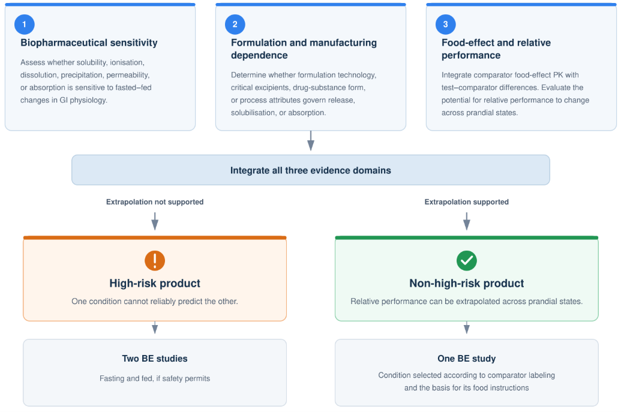
Figure 1: Integrated PK Assessment for ICH M13A Risk Classification
Practical Considerations for Applying the Risk-Based Framework
The central question is not simply whether food changes exposure to the comparator, but whether prandial state changes the relative performance of the test and comparator. Food-related changes in gastric emptying, luminal pH, bile secretion, and solubilization may affect both products similarly, or may interact differently with their formulation and manufacturing attributes. Where these interactions could alter the drug release, BE demonstrated under one prandial condition may not reliably predict the outcome under the other.
These evidence domains should not be treated as independent pass or fail criteria. Low drug solubility, formulation complexity, or a substantial food effect may identify sensitivity, but none independently establishes a high-risk classification. The conclusion should instead reflect the totality of evidence and the scientific basis for extrapolating relative performance across prandial states.
Risk classification is also not an inherent property of the drug substance or comparator product alone. Based on the available information, an initial risk classification may be informed by the comparator product. However, the proposed test product’s formulation design and manufacturing process must also be evaluated. Characteristics introduced by the test product may increase the potential for formulation-dependent food interactions and warrant reassessment of the product as high risk, as illustrated by FDA’s 2026 M13A case studies.[2]
In practice, the main challenge is not the study recommendations after classification, but how to determine when the available evidence is incomplete or when the test and comparator differ in formulation or manufacturing approach. Comparative formulation and manufacturing information may identify a plausible mechanism for differential product performance, while pH-solubility and biorelevant dissolution data can characterize sensitivity to relevant GI conditions. Pilot PK studies may provide direct evidence of whether the test-to-comparator relationship changes with prandial state, and physiologically based PK modeling may further integrate mechanistic, in vitro, and clinical findings.
Moreover, clear prospective documentation of the scientific rationale supporting risk classification is essential, particularly when proposing a single condition BE strategy. FDA and EMA product specific guidance (PSG) can also be helpful but should not replace an assessment of the proposed test product. Where uncertainty remains, early consultation with the relevant regulatory authority may help confirm the appropriate BE strategy.
Practical Example 1: Ivacaftor – Converging Evidence of High Risk
Kalydeco® (ivacaftor) tablets provide a clear example of how drug-substance properties, formulation design, and clinical PK evidence can converge on a high-risk classification under ICH M13A. The Kalydeco® tablet is an IR, film-coated oral dosage form indicated for cystic fibrosis.
First, ivacaftor has low aqueous solubility, making absorption potentially sensitive to changes in luminal solubilization[3,4] Kalydeco® uses an enabling spray-dried dispersion formulation containing hypromellose acetate succinate, a functional polymer used to enhance the solubility of low-solubility drugs.[5] The dispersion is produced through a specialized spray-drying process, and this formulation supports drug release following administration.[6]
Second, ivacaftor demonstrates a large food effect, with approximately 2.5- to 4-fold when administered with fat-containing food; which forms the basis for the labeled recommendation to administer ivacaftor with food.[3,4] However, the magnitude of this food effect alone does not establish high risk. The more important consideration is whether differences between the test and comparator formulations could cause their dissolution and solubilization to respond differently to these physiological changes.
Taken together, the low-solubility drug substance, enabling formulation approach, marked food effect, and potential for formulation-dependent responses to prandial-state physiology support classification of ivacaftor as high-risk. Consistent with this mechanistic concern, FDA’s current PSG for generic ivacaftor tablets recommends fasting and fed in vivo BE studies.[7] Although the PSG predates the final ICH M13A, it remains FDA’s current recommendation and is consistent with the ICH M13A risk-based framework.
Practical Example 2: Tadalafil – When the Classification is Less Straightforward
Cialis® (tadalafil) tablets provide a more nuanced example because the drug-substance properties, food effect PK, or comparator-product characteristics do not point as clearly toward a single risk classification.
Tadalafil is a low-solubility drug substance formulated as an IR, film-coated tablet. Unlike ivacaftor, EMA and FDA product information indicate that food does not significantly affect the rate or extent of tadalafil absorption from the commercial 20 mg tablet.[8-11] However, the EMA assessment notes that the excipient composition was selected and adjusted to promote rapid absorption.11 These findings highlight two distinct principles: poor solubility does not necessarily result in a food effect, and the absence of a food effect does not mean that formulation attributes are irrelevant to the reference product’s in vivo performance.
The EMA and FDA recommendations illustrate different regulatory approaches to managing this formulation-related uncertainty. EMA considers the formulation characteristics relevant to performance under fed conditions and classifies tadalafil tablets as “high risk”.[12] However, the fed study may be waived if the test and reference products use the same manufacturing technology and potentially bioavailability-relevant excipients are qualitatively the same and quantitatively similar. This approach does not change the high-risk classification; rather, it recognizes that the test-comparator similarity may adequately address the formulation-related risk that would otherwise require an additional fed BE study.
In contrast, the FDA PSG recommends a single fasting in vivo BE study.[13] This is consistent with a non-high-risk approach, although the PSG does not explicitly state the scientific rationale underlying the selected condition. Therefore, the two recommendations are better understood as different regulatory approaches rather than evidence that tadalafil has a universal risk classification.
More broadly, the fed-study waiver for tadalafil should not be interpreted as a general precedent that similarity in formulation or manufacturing can replace the additional fed BE study for all high-risk products. The relevance of any similarity depends on whether the matched attributes address the specific mechanisms governing drug release and absorption. Any waiver rationale should therefore establish a link from the proposed test product to the identified source of risk.
How BPSI Supports ICH M13A-Aligned BE Programs
BPSI works closely with sponsors to apply ICH M13A principles into practical, regulator-ready BE strategies. Our support includes:
- Risk-based BE study designs for IR drug products
- Fasting and fed study planning aligned with ICH M13A principles
- End-to-end execution of BE studies
Additional insights into BE execution and regulatory strategy are available through our blog series, which covers common challenges and best practices across BE programs (Bioequivalence Blog Posts).
Conclusion
ICH M13A provides a clear and scientifically grounded framework for distinguishing between high-risk and non-high-risk IR drug products. An efficient BE program is not necessarily the one with the fewest studies, but the one that directly addresses the mechanisms most likely to alter relative product performance. When the basis for cross-condition extrapolation is uncertain, an additional clinical comparison may provide the most direct evidence; when the mechanisms are well characterized by the product-specific evidence, further clinical evaluation may add limited scientific value.
For sponsors, success under ICH M13A depends on early understanding of how to apply the risk-based framework, thoughtful study design, and generation of evidence that target the remaining scientific questions. Applying this assessment before the pivotal program is finalized can reduce the risk of selecting an insufficient study strategy.
References
1. International Council for Harmonisation of Technical Requirements for Pharmaceuticals for Human Use. Bioequivalence for Immediate-Release Solid Oral Dosage Forms: M13A. Adopted July 23, 2024. Accessed April 30, 2026. https://database.ich.org/sites/default/files/ICH_M13A_Step4_Final_Guideline_2024_0723.pdf
2. U.S. Food and Drug Administration. ICH M13A: High-risk vs non-high-risk case studies: bioequivalence implications. CDER Small Business and Industry Assistance Webinar, April 23, 2026. Accessed August 31, 2026. https://www.youtube.com/watch?v=owEVCzDHr3k
3. Vertex Pharmaceuticals Incorporated. Kalydeco (ivacaftor) Tablets: Prescribing Information. Revised January 2012. Accessed May 5, 2026. https://www.accessdata.fda.gov/drugsatfda_docs/label/2012/203188lbl.pdf
4. European Medicines Agency. Kalydeco: EPAR—Product Information. Accessed May 5, 2026. https://www.ema.europa.eu/en/documents/product-information/kalydeco-epar-product-information_en.pdf
5. Tanno F, Nishiyama Y, Kokubo H, Obara S. Evaluation of hypromellose acetate succinate (HPMCAS) as a carrier in solid dispersions. Drug Dev Ind Pharm. 2004;30(1):9-17. doi:10.1081/DDC-120027506
6. Committee for Medicinal Products for Human Use. Kalydeco: EPAR—Public Assessment Report. European Medicines Agency; 2012. Accessed May 5, 2026. https://www.ema.europa.eu/en/documents/assessment-report/kalydeco-epar-public-assessment-report_en.pdf
7. US Food and Drug Administration. Draft Guidance on Ivacaftor. Recommended March 2015. Accessed May 5, 2026. https://www.accessdata.fda.gov/drugsatfda_docs/psg/Ivacaftor_Tablet_203188_RC03-15.pdf
8. Eli Lilly and Company. Cialis (tadalafil) tablets, for oral use [prescribing information]. Revised February 2018. Accessed August 31, 2026. https://www.accessdata.fda.gov/drugsatfda_docs/label/2018/021368s030lbl.pdf
9. US Food and Drug Administration, Center for Drug Evaluation and Research. Cialis (tadalafil), NDA 21-368: Clinical Pharmacology and Biopharmaceutics Review—Part 3. 2003. Accessed August 31, 2026. https://www.accessdata.fda.gov/drugsatfda_docs/nda/2003/21-368_Cialis_BioPharmr_P3.pdf
10. European Medicines Agency. Cialis: EPAR—product information. Accessed August 31, 2026. https://www.ema.europa.eu/en/documents/product-information/cialis-epar-product-information_en.pdf
11. European Medicines Agency, Committee for Proprietary Medicinal Products. Cialis: EPAR—scientific discussion. Accessed August 31, 2026. https://www.ema.europa.eu/en/documents/scientific-discussion/cialis-epar-scientific-discussion_en.pdf
12. European Medicines Agency, Committee for Medicinal Products for Human Use. Tadalafil film-coated tablets 2.5 mg, 5 mg, 10 mg and 20 mg: product-specific bioequivalence guidance. Revision 3. EMA/CHMP/315234/2014 Rev.3. Accessed September 1, 2026. https://www.ema.europa.eu/en/documents/scientific-guideline/tadalafil-film-coated-tablets-25-mg-5-mg-10-mg-20-mg-product-specific-bioequivalence-guidance-revision-3_en.pdf
13. US Food and Drug Administration. Draft guidance on tadalafil. PSG_021368. Revised October 2024. Accessed September 1, 2026. https://www.accessdata.fda.gov/drugsatfda_docs/psg/PSG_021368.pdf


Written By:
Nicholas Ruel
Jacinda Kwok, MSc